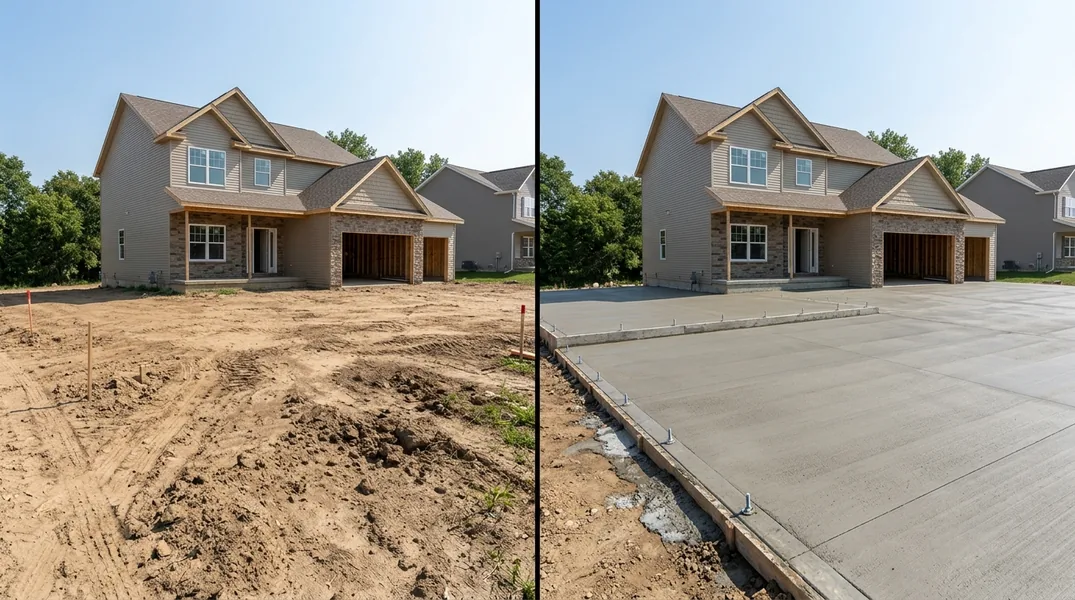
Understanding New Construction Concrete Slabs in Peoria
Buying a new home in Peoria is exciting, but the foundation of your investment deserves serious attention before you sign closing papers. A new construction concrete slab is more than just a flat surface; it's the structural base that supports your entire home. Unlike older homes with traditional basements or crawl spaces, many modern Peoria area new builds use concrete slabs poured directly on the ground, which means any issues with that slab can affect your home's stability, drainage, and long-term value.
The concrete slab in a new construction home typically consists of a 4 to 6-inch thick layer of concrete reinforced with rebar or wire mesh, poured over a prepared subgrade and gravel base. The quality of this foundation depends on proper site preparation, correct concrete mix design, adequate curing time, and skilled installation. Many homebuyers don't realize that the builder's responsibility for the slab quality and any defects is governed by both the purchase agreement and state law, which is why understanding what you're looking at during a builder foundation inspection is critical.
What to Look for During Your Builder Foundation Inspection
Before closing on your new home, you have the right to conduct a thorough foundation inspection. This is not the time to skip this step or assume the builder did everything correctly. A professional inspector will look for visible cracks, uneven surfaces, water damage signs, and proper slope for drainage away from the foundation. In Peoria's climate, where freeze-thaw cycles and seasonal moisture changes are common, foundation issues can develop quickly if the initial installation wasn't done properly.
Pay close attention to cracks in the concrete slab. Hairline cracks (less than 1/8 inch wide) are often normal as concrete cures and can be sealed with epoxy or polyurethane. However, wider cracks, stair-step patterns, or cracks that follow a consistent line may indicate settling problems, poor concrete mix, or subgrade issues that need professional evaluation. Look for water staining, efflorescence (white mineral deposits), or dampness, which suggest moisture infiltration. Also check that the slab slopes away from your home's perimeter at a minimum of 1 percent grade to prevent water from pooling against the foundation. Don't hesitate to ask your inspector to document everything with photos and detailed notes.
New Home Foundation Warranty: What Does It Actually Cover?
Every new home comes with a new home foundation warranty, but the coverage varies significantly depending on your builder and the warranty provider. Most builder warranties cover structural defects for 10 years, but the devil is in the details. You need to understand exactly what the warranty covers, what it excludes, and what steps you must take to file a claim. Some warranties only cover catastrophic structural failure, not cosmetic cracks or minor settling. Others exclude damage caused by poor site drainage or homeowner neglect, even if the root cause was the builder's improper grading.
Before closing, request a copy of the warranty document and read it carefully, or have your real estate attorney review it. Ask your builder's representative to explain coverage limits, exclusions, and the claims process. Does the warranty cover foundation repair costs in full, or do you pay a deductible? How long do you have to report a defect after closing? Is the warranty transferable if you sell your home? Some warranties require you to mitigate damage (take reasonable steps to prevent it from worsening), so if you notice a problem, document it and notify the builder promptly. Understanding these terms now prevents costly disputes later.
Common Foundation Issues in New Construction Homes
Even though new construction should mean a solid foundation, defects do occur. One of the most common issues is improper site preparation. If the subgrade wasn't compacted properly or if fill material wasn't adequately settled before the concrete was poured, the slab can crack or settle unevenly. Another frequent problem is poor drainage. If the builder didn't slope the ground away from the foundation or failed to install proper drainage systems, water will accumulate against the slab, leading to moisture in basements or crawlspaces and potential mold growth.
Concrete quality issues also happen in new construction. If the concrete mix wasn't properly designed for Peoria's soil conditions and climate, or if the concrete wasn't given adequate time to cure before the home was closed in, premature cracking and deterioration can follow. Some builders rush the construction timeline to meet sales deadlines, which can compromise concrete quality. Additionally, if rebar or wire mesh reinforcement was installed incorrectly or wasn't placed at the proper depth, the slab's structural integrity is compromised. These aren't always obvious during a casual walkthrough, which is why a professional foundation inspection is worth every penny.
Post-Closing: When to Call a Professional for Concrete Repair Near Me
After you close on your new home, keep monitoring your foundation. Small issues caught early are far cheaper to address than problems that have been ignored for years. If you notice new cracks appearing, uneven floors, doors or windows that stick, or signs of water infiltration, don't wait. Contact a professional concrete contractor who understands both residential foundations and local soil conditions. Concrete Repair & Resurfacing specialists can assess whether cracks are cosmetic or structural and recommend appropriate solutions, from simple epoxy injection to more involved foundation stabilization.
When selecting a contractor for foundation repair, choose someone with experience in new construction homes and familiarity with Peoria area building practices and soil conditions. Get multiple opinions before committing to expensive repairs, and always verify that the contractor is fully insured. If you believe the issue is a builder defect covered under warranty, document everything and file a claim before attempting repairs, as some warranty provisions are voided if unauthorized work is performed. For a free estimate on foundation concerns or repairs, Peoria Concrete can provide professional guidance. Call (309) 322-1763 to discuss your specific situation.
Protecting Your Investment: Final Steps Before Closing
Your foundation is too important to leave to chance. Before closing on your new Peoria area home, schedule a professional foundation inspection at least two weeks before your closing date. This gives you time to address any concerns with the builder or renegotiate terms if serious defects are discovered. Request that the inspector provide a detailed written report with photos and recommendations. If issues are found, get written estimates for repairs and present them to the builder as leverage for corrections or credits.
Ask the builder for documentation of site preparation, concrete testing reports, and curing protocols. Reputable builders should be happy to provide this information. Request copies of any soil testing or engineering reports from the construction phase. These documents become valuable if disputes arise later. Finally, take your own photos and measurements of the foundation before moving in, documenting the condition on closing day. This creates a baseline for comparison if problems develop later. Your home is likely the largest purchase you'll ever make, and the foundation is its most critical component. Taking these steps now protects your investment for decades to come. If you have questions about foundation conditions or need professional assessment, Peoria Concrete is here to help. Contact us at (309) 322-1763 for expert advice.
Looking for a professional concrete contractor in Peoria? Peoria Concrete responds fast for all your concrete needs.
Get a Free QuoteOur services: Concrete Driveways · Concrete Patios · Stamped & Decorative Concrete