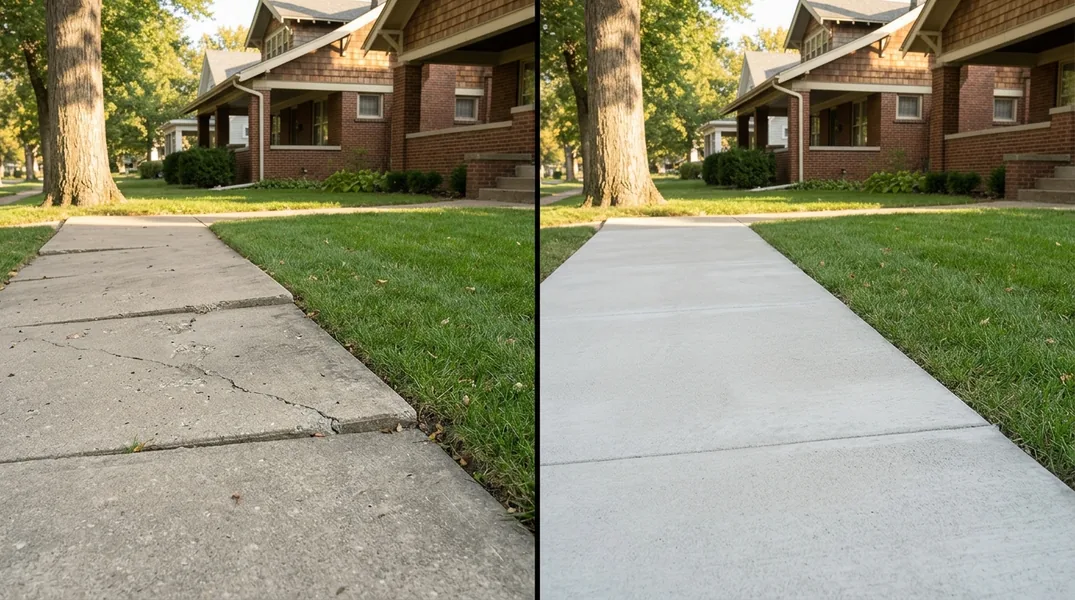
Understanding Peoria's Loess Soil and Its Impact on Concrete
Peoria sits on some of the Midwest's most distinctive geology. The region was shaped by glacial activity thousands of years ago, leaving behind a fine, powdery soil called loess. Unlike clay or sandy soils that bind tightly together, loess particles are extremely fine and loosely packed, creating a foundation that shifts and settles unpredictably. This geological reality directly affects how concrete performs in your yard.
When concrete is poured over loess soil, the foundation beneath can compress unevenly as moisture levels fluctuate with the seasons. In dry summers, loess shrinks and creates voids beneath your concrete slab. When fall and spring rains arrive, water fills those voids and causes the soil to expand. This constant cycle of compression and expansion puts tremendous stress on concrete, leading to cracks, settling, and surface damage that homeowners notice year after year. The problem isn't always visible immediately, but over time, the structural integrity of your driveway weakens from beneath.
Frost Heave: Winter's Hidden Threat to Illinois Concrete
If loess soil is challenging, frost heave is its dangerous partner. Peoria experiences significant winter freezing, with temperatures regularly dropping well below freezing for extended periods. When moisture in the soil beneath your concrete freezes, it expands with tremendous force. This expansion can lift your driveway or patio by several inches, creating an uneven surface that's both a safety hazard and an eyesore.
Frost heave damage often appears as sudden cracks, buckling, or a noticeable hump in the middle of your driveway after a particularly cold winter. The concrete itself isn't necessarily weak; the problem is the force exerted from below. When spring thaw arrives and the ice melts, the soil settles back down, but the concrete doesn't always return to its original position. Repeated freeze-thaw cycles compound the problem year after year, which is why many Peoria homeowners find their driveways deteriorating faster than they expected. Proper site preparation and drainage are critical to minimizing frost heave damage, and that's where professional installation makes a real difference.
Road Salt and Chemical Damage to Your Concrete
Winter in Illinois means road salt. Municipalities and homeowners alike apply salt and de-icing chemicals to prevent slipping and improve safety. However, these chemicals are extremely corrosive to concrete. When salt sits on your driveway or seeps into cracks and pores, it accelerates the deterioration process significantly. The salt draws moisture into the concrete, and as that moisture freezes and thaws, it creates internal pressure that breaks apart the concrete from within.
Additionally, road salt reacts chemically with concrete, breaking down the cement binder that holds the aggregate together. You may notice white, powdery residue on your concrete surface, which is salt efflorescence. While this is primarily a cosmetic issue, it signals that salt has penetrated your concrete and ongoing damage is occurring. Over several winters, this chemical attack can reduce your concrete's strength and lifespan by years. The combination of road salt exposure, freeze-thaw cycles, and loess soil creates a perfect storm for concrete deterioration in the Illinois climate.
Why Peoria Concrete Requires Specialized Installation and Maintenance
Given the unique environmental challenges facing concrete in Peoria, standard concrete installation simply isn't enough. Professional contractors understand that proper site preparation, adequate drainage, and appropriate concrete mix design are essential for longevity. A quality driveway installation begins with removing weak loess soil and replacing it with compacted, well-draining material that resists settling. The concrete itself should be a robust mix with air entrainment, which creates tiny air pockets that allow the concrete to expand and contract without cracking.
Drainage is equally critical. Water pooling on your driveway or failing to drain properly accelerates every problem we've discussed. Proper grading, French drains, or other drainage solutions can dramatically extend your concrete's lifespan. Sealing your concrete after installation and every few years thereafter provides a protective barrier against salt penetration and moisture intrusion. If you're considering new Concrete Driveways or need to evaluate your existing driveway's condition, it's worth consulting with a contractor familiar with Peoria's specific soil and climate challenges.
Concrete Repair and Resurfacing Options for Damaged Driveways
If your driveway is already showing signs of damage from loess settlement, frost heave, or salt damage, you have options. Minor cracks and surface damage can often be addressed with targeted repairs before the problem spreads. Larger issues like significant cracking, settling, or spalling may require Concrete Repair and Resurfacing to restore both appearance and function. Resurfacing involves applying a new layer of concrete over the damaged surface, which is more cost-effective than complete replacement in many cases.
For driveways that are severely compromised, full replacement may be the most practical long-term solution, especially if you plan to stay in your home for many years. A new installation gives you the opportunity to address underlying soil and drainage issues that caused the original damage. Whether you choose repair or replacement, the key is addressing the problem promptly. Deferred maintenance on a damaged driveway allows water infiltration and further deterioration, ultimately costing you more money. If you're unsure whether your driveway needs repair or replacement, Peoria Concrete can provide a professional assessment and recommend the best path forward.
Protecting Your Investment: Maintenance Tips for Peoria Homeowners
Once you have quality concrete in place, ongoing maintenance is your best defense against Peoria's harsh conditions. Seal your driveway every two to three years to maintain protection against moisture and salt penetration. This relatively inexpensive step can add years to your concrete's lifespan. After winter, rinse your driveway thoroughly to remove salt residue before it has time to cause chemical damage. Avoid using rock salt on your own driveway if possible, and instead use pet-safe or concrete-safe de-icing products that are less corrosive.
Monitor your driveway for early signs of damage. Small cracks should be sealed promptly before water enters and causes further deterioration. Keep gutters and downspouts functioning properly so water drains away from your concrete rather than pooling on it. During spring thaw, watch for signs of frost heave or settling, and address any drainage issues that become apparent. By combining professional installation with consistent maintenance, you can significantly extend your concrete's life despite the challenging environment. When you're ready to protect your driveway or address existing damage, contact Peoria Concrete at (309) 322-1763 to discuss your specific situation and get a free estimate.
Looking for a professional concrete contractor in Peoria? Peoria Concrete responds fast for all your concrete needs.
Get a Free QuoteOur services: Concrete Driveways · Concrete Patios · Stamped & Decorative Concrete